
Solar & Storage for Real-World Needs
Explore practical system sizes, typical loads and the questions to ask before choosing an inverter, battery or solar array.
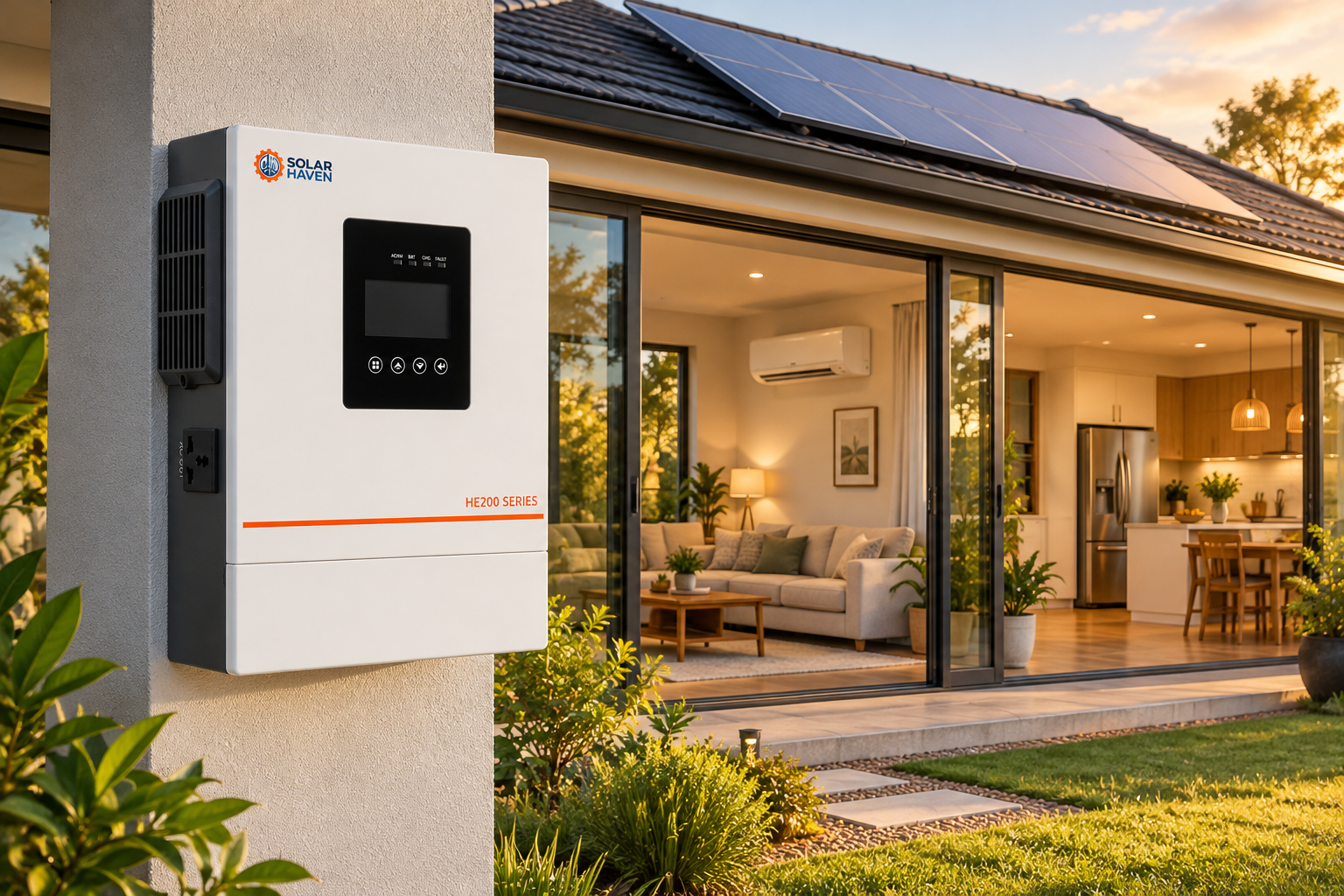
Home Solar + Battery Storage
For lighting, refrigerators, televisions, fans, air conditioning and essential backup circuits. System size depends on which appliances operate at the same time, how long they run and whether backup is needed.
Inverter sizing should consider continuous power demand and appliance starting loads. Motors and compressors may require substantial starting surge capacity.
How much electricity does your home use?
Daily energy (kWh) = appliance watts × quantity × hours per day ÷ 1,000. Add all appliances to estimate daily use.
| Example appliance | Power | Daily use | Energy |
|---|---|---|---|
| LED lighting | 100 W | 6 h | 0.60 kWh |
| Refrigerator | 100 W | 10 h* | 1.00 kWh |
| Television | 100 W | 5 h | 0.50 kWh |
| Fans | 60 W | 8 h | 0.48 kWh |
| Air conditioner | 1,000 W | 5 h | 5.00 kWh |
| Total estimated daily consumption | 7.58 kWh | ||
*Refrigerator uses 10 equivalent running hours, not 10 continuous hours. All values are teaching examples; actual nameplate ratings and duty cycles vary.
Calculate daily energy
Sum appliance energy in kWh/day. This determines how much stored energy you may need.
Calculate peak load
Add watts of appliances running simultaneously, then check motor starting surge. This guides inverter sizing.
Size battery & solar
Estimate battery from required backup hours and usable capacity; size solar using local peak sun hours and system losses.
Worked example: one day of backup
At 7.58 kWh/day, with 90% usable battery capacity and 90% discharge-path efficiency:
7.58 ÷ (0.90 × 0.90) ≈ 9.36 kWh
A nominal 10 kWh battery is a starting point for evaluation, not a guarantee of full-day autonomy. Solar sizing example: 7.58 ÷ (4 peak sun hours × 0.8 performance factor) ≈ 2.37 kWp; actual solar array size depends on location, season, orientation and load timing.
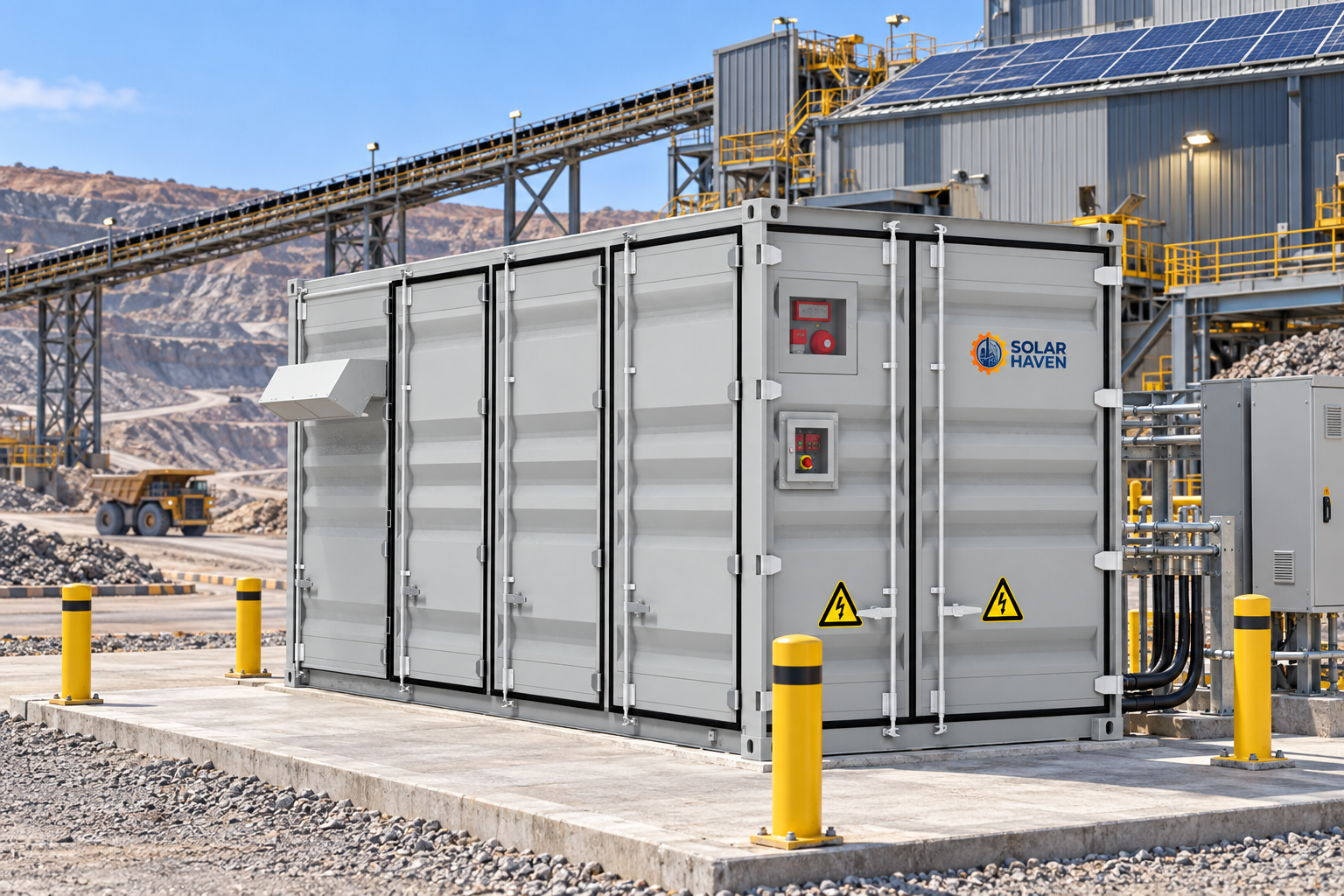
Commercial & Industrial Storage
For workshops, warehouses, commercial buildings and facilities with substantial or time-varying loads. A system study considers peak demand (kW), energy shifted or backed up (kWh), available space, grid rules and operating schedule.
Illustrative storage capacities from the supplied cabinet catalog; suitability and power rating must be confirmed per model.
Example: estimate storage for a critical load
A 30 kW critical load for 3 hours requires about 90 kWh delivered. With 90% usable battery capacity and 90% system efficiency, nominal storage ≈ 111 kWh. Verify discharge power, site safety requirements and local electrical standards before selection.
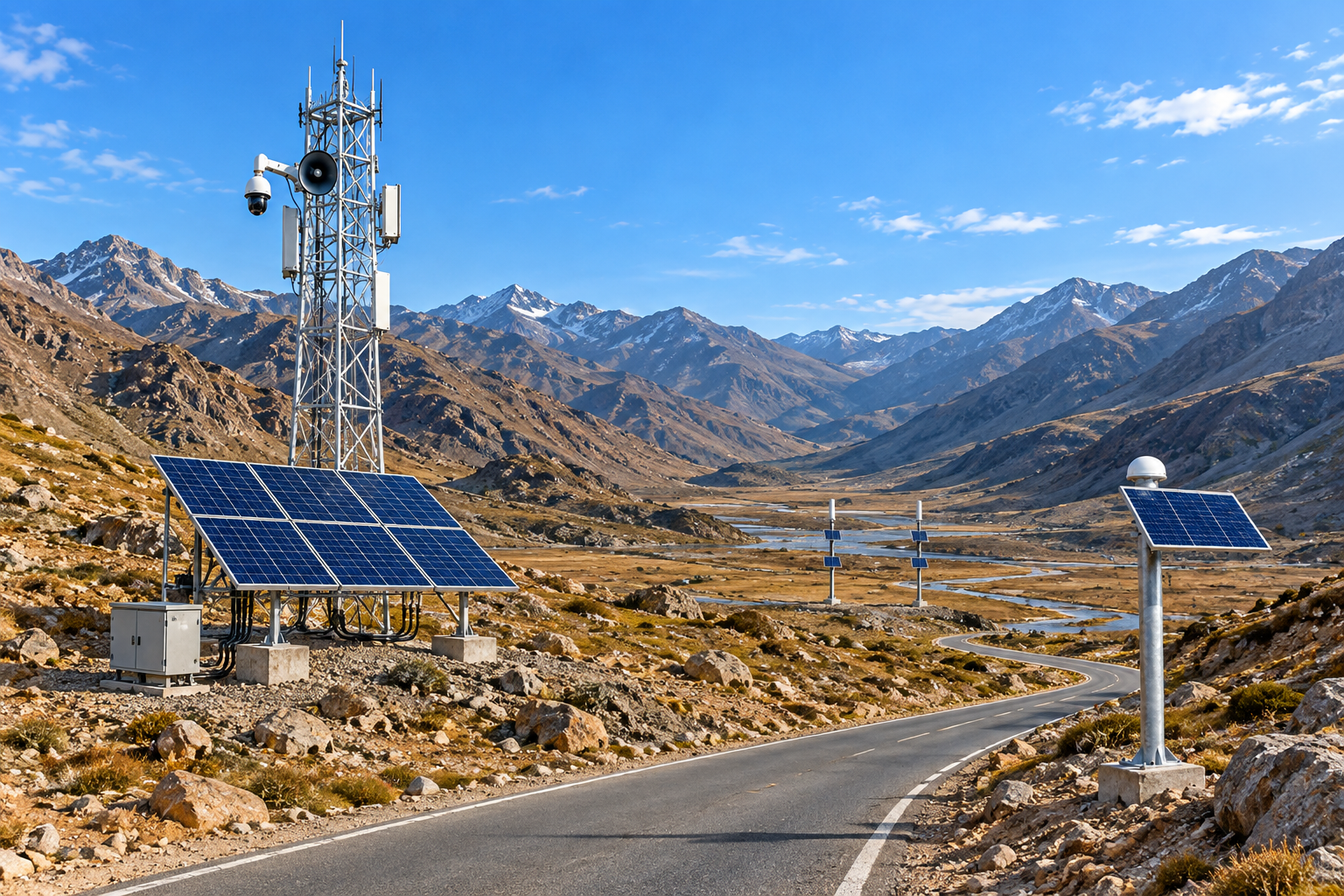
Power Where the Grid Cannot Reach
For remote homes, farms, telecom sites and locations with unstable utility service. Off-grid systems must supply daytime loads, overnight consumption and reserve for poor-weather days.
Example: two days of autonomy
For 5 kWh/day and two sunless days, nominal battery ≈ (5 × 2) ÷ (0.9 × 0.9) = 12.35 kWh. Additional margin may be needed for seasonal variation, battery aging and critical loads.